
Heavy Duty Forging Solutions Enhancing Durability Across High Impact Industrial Environments

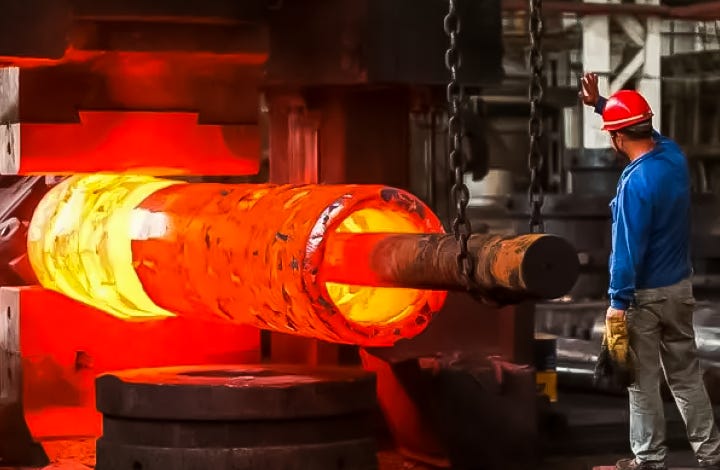
Industrial operations that rely on impact-intensive processes often search for components that maintain strength under repeated strain. Engineers focus on materials that balance structural toughness with reliable performance across unpredictable conditions. Techniques developed through Forging Vietnam help shape this demand into practical, long-lasting solutions. The right approach allows heavy systems to operate with confidence in rugged production settings.
Reinforced Builds For Harsh Workloads
Heavy forging systems offer stability for environments where shock and force dominate routine operations. Durable metal shaping ensures every component enters service with consistent strength characteristics. These reinforced builds streamline demanding tasks with performance that remains steady under challenging conditions.
Precision Techniques Strengthening Material Integrity
Forging methods continue evolving to meet complex industrial expectations. Each controlled step ensures stable densities and uniform properties across the finished piece.
- High pressure shaping improves internal strength
- Uniform grain flow resists high impact strain
- Temperature control maintains structural consistency
- Dimensional accuracy supports rigorous assembly
This level of refinement helps minimize fatigue in equipment that supports constant mechanical force. Integrated improvements also allow operators to predict long-term performance with higher confidence.
Why do forged components handle repeated force effectively?
Forged structures distribute stress more naturally across their internal alignment. Heat and pressure work together to refine density in a way that cast forms struggle to match. This controlled transformation delivers stronger surfaces and predictable durability across long operational cycles.
Advanced Processing Supporting Demanding Loads
Enhanced forging workflows continue shaping solutions for high energy operations requiring dependable endurance. Sophisticated equipment coordinates shaping and temperature transitions for more stable outcomes, allowing demanding industries to depend on consistent performance through continuous workloads.
- Thermal calibration reduces internal distortion risks
- Mechanical alignment enhances impact resistance levels
- Progressive compression shapes thicker strength zones
- Adaptive tooling improves metal flow precision
These qualities become crucial as operations scale and equipment demands intensify. With dependable parts, operators reduce maintenance downtime while supporting efficient production rhythms across large facilities.
How can forged designs improve equipment stability during extended use?
Stability emerges naturally from dense internal structures and stronger transitional zones. Equipment benefits from these characteristics because they minimize surface failures that could otherwise accelerate wear. The result is smoother performance during prolonged, force-heavy operations without unexpected interruptions.
Industrial Adaptations Supporting Broader Operational Needs
Designers in heavy impact sectors explore innovative shaping methods to match evolving system expectations. Their focus expands toward solutions that support continuous motion and heavy compression. Strategies refined around Forging Vietnam showcase how controlled shaping and material balance can elevate equipment performance across varying industrial demands.
Broader Engineering Approaches Creating Stronger Outcomes
Modern industrial environments continue adopting forging enhancements that improve operational consistency. These adaptations guide equipment toward smoother function under mechanical force. As industries expand their expectations, forging innovations keep advancing to support sturdier performance across increasingly demanding environments.