

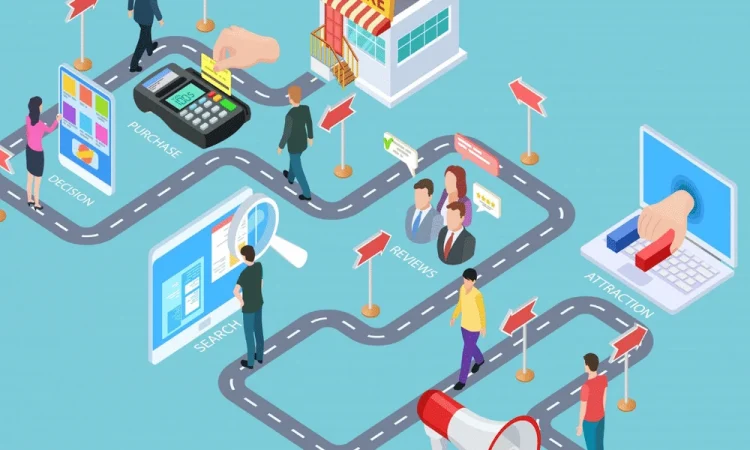
Businesses need to understand what customers go through before, during, and after they buy a product or service. Journey mapping helps businesses see this process from the customer’s point of view. Instead of looking only at sales, it looks at every step, from the first time a customer discovers a brand to the support they receive after making a purchase. By understanding these steps, businesses can find problems, improve their services, and create better experiences.
Customer journey mapping is useful for businesses of all sizes. Customers may interact with a business through a website, social media, email, advertisements, customer service, physical stores, and other channels. Each interaction can affect how they feel about the business. A good customer journey map brings these interactions together in one clear view.
What Is Customer Journey Mapping?
Customer journey mapping is the process of creating a visual guide that shows how a customer interacts with a business. It explains what customers do, what they think, how they feel, and what problems they may face at different points in their journey.
A customer journey does not start when a customer clicks the “buy” button. It can begin when they first realize they have a problem or need. They may then search online, read articles, watch videos, compare different products, check reviews, visit a website, talk to customer support, and finally decide whether to make a purchase.
After the purchase, the journey continues. Customers may need help using a product, contact support, renew a service, leave a review, or recommend the business to someone else. This is why mapping the entire journey can give businesses a better understanding of the customer experience.
Main Stages of the Customer Journey
The customer journey can be divided into several common stages. While every business may have a slightly different journey, these stages provide a useful starting point.
1. Awareness
The customer becomes aware of a need, problem, product, or brand. They may find a business through search engines, social media, advertisements, recommendations, or online content.
At this stage, businesses should focus on providing useful information. Blog posts, guides, videos, social media content, and educational pages can help customers understand their problem and possible solutions.
2. Consideration
The customer knows what they need and starts looking at different options. They may compare prices, features, reviews, services, and other details.
Businesses can help customers during this stage by providing clear product information, comparisons, customer reviews, case studies, and answers to common questions.
3. Decision
The customer is ready to choose a product or service. At this point, the buying process should be simple and clear. Complicated forms, unclear prices, hidden fees, or difficult website navigation can cause customers to leave before completing their purchase.
4. Retention
The journey continues after the purchase. Customers may need help setting up a product, learning how to use a service, or solving a problem. Good customer support and helpful resources can make customers feel valued and encourage them to stay with the business.
5. Loyalty
Customers who have positive experiences may return for another purchase or recommend the business to others. Loyalty can grow when businesses provide reliable products, helpful support, simple communication, and rewards for repeat customers.
Types of Customer Journey Maps
There are several types of customer journey maps. The right type depends on what a business wants to learn or improve.
Current-state map: This shows what customers experience right now. It can help businesses find problems, delays, confusing steps, and other areas that need improvement.
Day-in-the-life map: This looks at the customer’s wider daily experience, including things that may not directly involve the business. It can help businesses understand customer needs, habits, and problems.
Future-state map: This shows what the business wants the customer experience to look like in the future. It can help teams plan improvements and set clear goals.
Service blueprint: This goes deeper than a regular customer journey map. It connects the customer experience with the people, systems, technology, and processes that support each step.
How to Create an Effective Customer Journey Map
Creating a customer journey map requires more than listing the steps customers take. Businesses need real information about their customers and should regularly update the map as customer needs change.
Steps for Creating a Customer Journey Map
1. Set a clear goal
Start by deciding what you want the map to help you understand. You may want to improve customer satisfaction, increase sales, reduce customer complaints, improve support, or make your website easier to use.
A clear goal keeps the mapping process focused.
2. Choose a customer persona
A customer persona represents a specific type of customer. Give attention to their needs, goals, habits, concerns, and reasons for choosing a product or service.
Avoid creating a journey map based only on assumptions. Customer interviews, surveys, reviews, support records, website data, and other customer information can provide a more accurate picture.
3. List customer touchpoints
A touchpoint is any place where a customer interacts with your business. Examples include:
- Search engines
- Websites
- Social media
- Emails
- Advertisements
- Physical stores
- Customer service
- Online reviews
- Product pages
- Checkout pages
- Follow-up messages
Listing these touchpoints helps businesses see how many interactions customers may have before and after a purchase.
4. Map customer actions
Write down what customers do at each stage. For example, they may search for information, visit a website, compare products, contact support, or complete a purchase.
Knowing these actions helps businesses understand how customers move from one stage to another.
5. Add customer thoughts and feelings
Customer actions are only one part of the journey. Businesses should also consider what customers may be thinking and feeling.
A customer may feel excited when they discover a possible solution but become confused when they cannot find pricing information. They may feel frustrated when customer support takes too long to respond. Understanding these feelings helps businesses find areas where the experience can be improved.
6. Find pain points
Pain points are problems that make the customer experience difficult. These may include slow websites, complicated checkout steps, unclear instructions, long waiting times, poor communication, or limited support options.
Finding these problems is one of the main reasons businesses create customer journey maps.
7. Find opportunities for improvement
After identifying problems, think about what can be changed. A business may simplify a form, improve website navigation, add clearer product information, create better support materials, or provide faster responses.
The goal is not simply to create a map. The goal is to use what the map shows to make real improvements.
8. Review the map regularly
Customer behavior can change because of new technology, market changes, new products, or changes in customer expectations. For this reason, a customer journey map should not be treated as a one-time project.
Reviewing the map regularly helps businesses keep their customer experience useful and up to date.
Benefits of Customer Journey Mapping
Customer journey mapping can support many areas of a business. One of its biggest benefits is that it helps teams look at the experience from the customer’s point of view instead of focusing only on internal processes.
Better customer experiences: Businesses can find difficult or confusing parts of the customer journey and make them easier.
More personalized interactions: Understanding customer needs and behavior can help businesses provide information and services that are more relevant to each customer.
Better customer support: Journey maps can show where customers commonly need help. Businesses can use this information to improve support channels and create useful self-service resources.
More consistent communication: Mapping the journey helps teams understand when and how customers receive messages. This can reduce repeated or unnecessary communication.
Improved products and services: Customer feedback and journey data can reveal what customers like, what they struggle with, and what they expect. These insights can support future product and service improvements.
Faster problem solving: When businesses know where problems happen, teams can focus their time and resources on the areas that have the biggest effect on customers.
Stronger customer relationships: Customers are more likely to continue using a business when they receive helpful service and have positive experiences at different touchpoints.
Better business decisions: A customer journey map brings customer actions, needs, and problems into one view. This can help different teams make decisions based on customer information rather than assumptions.
Best Practices for Customer Journey Mapping
A useful customer journey map should be clear, based on real information, and easy for different teams to understand. Keep the map focused on a specific customer group and goal rather than trying to cover every possible customer at once.
It is also important to involve people from different departments. Marketing may understand how customers discover the business, while sales may understand the buying process and customer service may know the most common problems after purchase. Bringing these views together can create a more complete picture.
Businesses should also separate what customers actually do from what the business thinks they do. Customer interviews, surveys, reviews, website data, and support records can help confirm whether the map reflects real experiences.
Finally, treat the journey map as a working document. When a new product, service, website, or support process is introduced, the map may need to change.
Final Thoughts
Customer journey mapping gives businesses a clearer view of how customers experience their brand from beginning to end. It shows the steps customers take, the questions they have, the emotions they may experience, and the problems that can stop them from moving forward.
A strong customer journey map is not simply a chart. It is a tool for finding ways to make every customer interaction easier and more useful. By studying customer behavior, fixing pain points, improving communication, and reviewing the journey regularly, businesses can create experiences that encourage customers to return and build long-term relationships.